Houzzer Profile: International Women’s Day
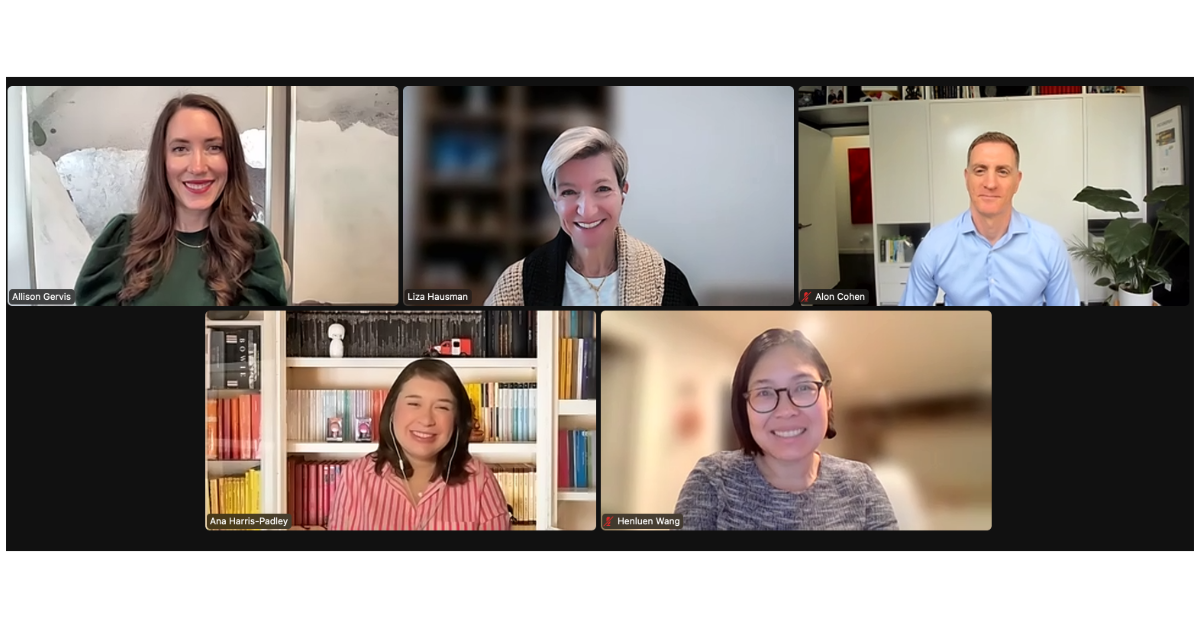
Our Houzz community is full of inspiring women – including within our Leadership Team!
Recently, Co-founder and CEO Alon Cohen sat down with four of our top female leaders – Chief Financial Officer Henluen Wang, Vice President of Industry Marketing Liza Hausman, Vice President of People Ana Harris-Padley and Vice President of Branding & Communications Allison Gervis – in honor of International Women’s Day. These leaders shared their stories, experiences and insights on their career journeys and how they’ve built their futures at Houzz.
The conversation, excerpted below, has been edited for length and clarity.
Alon Cohen: I’m excited to be part of today’s annual recognition of International Women’s Day and Women’s History Month. We’re incredibly lucky to have amazing women leading so many areas of our business, including the leaders we’re talking to today. They, along with many others in the company, have significantly increased their scope of responsibility at Houzz from when they joined, and have been promoted to more senior roles and with broader responsibilities. Let’s get started!
What advice would you give to your younger self, particularly when starting out in your career?
Henluen Wang: I worked on the financial planning and analysis team at a global tech company, and I spent the first four years of my career head down, focused on the technical elements of finance. I spent a ton of time building the most complex, fanciest Excel models I could.
One day, my boss sat me down and said, Look, you’re really good at numbers in Excel, but you have to look beyond the spreadsheet. You really need to focus on the partnership as well.
I wish I had understood earlier that it’s more than just finance. It’s about how it fits into other elements of the business, how the numbers can inform and support sales initiatives, marketing initiatives, product initiatives. Looking beyond the spreadsheet was one of those big catalysts that moved me to that next stage in my career. As I have progressed, I actually spend less time looking at Excel and more time sitting with my business partners, many of them here today on the panel, really trying to understand what motivates them and how to use the numbers to help inform business decisions.
The other thing I’d say is that I think a lot of people are really used to doing extremely well at school and maybe had a smooth academic career. In the working world, there will be stumbles, because you’re learning or encountering somebody who may not be the best person to work with. The most important thing is to just treat that as a learning experience. Don’t let that get you down. Over the long run, that mindset helped my career so much.
What advice would you give to Houzzers who want more visibility and are looking to advance their career, particularly in a remote work environment?
Liza Hausman: As someone whose oldest child is graduating college and starting a remote job, I think about this quite a bit. I realized the things you need to do aren’t much different than working in person.
My advice is to build a network inside and outside your immediate organization. Ask people who are respected for 15 minutes of their time to hear about their experience, ask their advice, ask how they go about having their voices heard. Volunteer for projects or anything that will give you time with other people, inside and outside your organization. If you’re somewhere where there are colleagues in your area, invite them to meet for lunch, coffee or a walk, and ask them about themselves. It’s a good way to build relationships and build that network.
Allison Gervis: I agree you have to be more intentional and proactive when working remotely. First, it starts with being really great at your job and being somebody people can depend on. You’ll want to be seen as someone who will get things done. In a remote world, it can also mean managing up so that your manager is aware of the progress you’re making on projects or what you’ve accomplished. It also helps to really define your goals and where you want to go, and communicate that. A great tool for this is an individual development plan, which helps you think about both your short- and longer-term goals.
You’re the CEO of your own career, so it’s up to you to really carve out time to check in on your progress, whether that’s saving part of a weekly one-on-one with your boss or even setting up specific meetings to make sure you feel like you’re developing on the areas you want to, and that it’s seen and reflected in your work.
How do you approach mentorship, both as the mentor as well as someone who’s seeking mentorship?
Ana Harris-Padley: As the leader of the People team, it’s a topic close to my heart. A mentor program is critical to any company’s success, but to me, the program’s infrastructure is only as valuable as the time the mentees actually put in. For a mentorship to be successful, you have to be clear about what you’re looking for, what you expect out of your mentor, how you want to develop, what you want to learn from that person.
And that can be something quick, like Liza was saying, when you want to talk to someone for 15 minutes, because you want to pick their brain. And it could be something that takes six months to a year, because you’re really trying to learn, hone and develop a skill.
As Allison said, you’re the CEO of your own career. Take the lead and be really clear about what you’re looking for. That makes the mentor feel like they’re being more valuable and makes sure the mentee actually gets what they want out of it: developing, learning and growing. Because to me, that’s when mentorship is really successful.
As a leader, have you ever been in a situation where your opinion or your authority wasn’t taken as seriously as your counterparts? What advice would you give to Houzzers about finding their voice in a difficult situation?
Liza: I think most women probably have experienced this at some point in their careers, if not multiple times. There have been many times when people assume that you’re in a smaller role than you are.
A few pieces of advice: One is to bring facts to the conversation, so you have a nice foundation on which to present your ideas and opinions. Another is to make yourself an expert. Be knowledgeable, researched and prepared about a topic before you bring your ideas and opinions. It doesn’t mean you have to know everything, but you should know something. Another technique is to listen carefully to what others are saying and build on that when you present your ideas. Start off by acknowledging the thoughts or ideas that have already been shared, and then add onto it – that can be a great way to get your voice heard in the middle of a discussion.
It’s also helpful to be aware of different working styles. Often it can be hard to make your voice heard if you have a different style of speaking, presenting or sharing, or just working with other people. Understanding how others perceive you can be really helpful.
Henluen: I spent a decade in investment banking and advising the tech C-suite, and I was often the only woman in the room. Sometimes these new clients would assume I was the most junior person on the team, and they would shake the hand of the person next to me who was six feet tall, could grow lots of facial hair and was three levels lower than me.
Earlier in my career when these situations would happen, people would apologize, and I’d say it was okay, because sometimes we have a tendency to want to make people feel at ease. But I stopped doing that and would pause to give the other person the opportunity to really think about their own perceptions and misconceptions about what a leader looks like.
Building a strong reputation within an organization, being known as an expert in a particular field and being particularly collaborative over the long term ultimately help break away a lot of these early perceptions that people may have about someone just by looking at them.
What personal traits, behaviors or actions do you think most contribute to your success at Houzz?
Allison: A big contributing factor has been saying yes when opportunities presented themselves, and seeing gaps and filling them to get things done.
For example, I started at Houzz as an individual contributor at a manager level, and our research program at that time was fantastic and really important in the industry. We saw the opportunity to position Houzz further as a thought leader by doing more with trends, especially around kitchens and bathrooms, rooms people are most likely to renovate. We put together a survey and got thousands of responses from our community, which was so exciting. And then we needed to analyze the data.
That’s not my background, but the work needed to get done. So I jumped into the data and put together the first draft of the report and the press release with what I thought were interesting findings. That willingness to know what needs to get done, going for it without being asked and delivering quality work have really been valued throughout my time here.
The one other piece is that, at Houzz, we know good ideas can come from anywhere in the company, and I’ve seen so many examples of this in the decade I’ve been here. So another way you can advance your career is to carve out even 10 minutes a week to think strategically about what we are doing, what we could be doing or how you could make something that your team’s doing more efficient to benefit the business. Take what’s being said or done, and push it to the next level.
Ana: I totally echo what you said: Saying yes and jumping in. Saying yes and getting involved are absolutely critical, and you should also make sure you have that sense of responsibility, ownership and follow through to show that you’re contributing and adding value.
I started with Houzz in London, where I led the international People team. At one point, we needed to replace a systems provider, and neither my colleague nor I had experience doing that. But we went out, talked to providers, made a recommendation and implemented the system. And now I have a lot of knowledge that adds value to the business and helped Houzzers have a better experience. Nobody asked us to go and do that. We felt it was the right thing to do based on what we knew, and it was something we felt would help move the business forward.
How do you balance your career, personal life and passions while you’re leading your respective organizations? What role has your personal support system played in your success?
Liza: When I started at Houzz, I had a 5-year-old and an 8-year-old, so my definition of balance was very different now that they are in college and I’m an empty nester. The advice I would give my younger self might be to know that things change over time and to focus on your priorities at that moment.
I would say balancing is figuring out what’s most important for you to make yourself happy. It’s also being okay knowing that children may be a top priority now, and you’re not going to have a lot of time for other things for a few years. That’s going to change!
So, if you can, find time to recharge, whether that’s sports or reading a book or getting away for a day or spending time with your partner. You just have to figure out what’s right for you; there’s not a one-size-fits-all answer for everybody.
And in terms of a partner or support network? Yes, a hundred percent. It’s important to have people to be able to go to in the difficult times and talk things through, and not feel alone.
Henluen: I want to echo what Liza said about the partnership piece. I feel so fortunate to have a partner that is in it 50/50. Sometimes he’s doing 70, and I’m doing 30 when I’m busier with work – and that’s okay. Now that I have young children – a 2- and a 6-year-old – not everything’s going to be perfect. It’s a matter of balancing work and home life such that it works for you, and you get to where you need to go. Having a really supportive partner to help when I just don’t have the time makes a huge difference.
Allison: Recognizing that you can’t get everything done yourself or you might need help in certain areas is important. We have little kids, so we’ve built a network of people who can help out if the kids are sick or if we both have evening events for work or are traveling.
Not feeling guilty to ask for help from other people is really important, too. When I had my son, I felt like I needed to do everything else on my own. I was working and wasn’t with him during the day. Now I realize the time we have together is so special, and I carve out my special kid time after work. I’m able to be more focused, because I really grind during the day and then can commit that time between work and bedtime, even if I sometimes need to sign on afterward to finish up. Releasing yourself from expectations or guilt is important, too.
Somebody commented during our responses that they would love to hear from Alon on his take, as well.
Alon: Absolutely. [Co-founder and executive chair] Adi and I were in a special situation, because we’re both in the super-hectic world of startups. At the time, we had two kids and then had our youngest 10 years ago while we were at Houzz.
With small kids, it is not easy, first of all, and it’s definitely stressful. As the kids grew older, we made sure that we spent time with them. For example, before we were remote, our kids would come and have lunch with one of us. It’s very important to have those one-on-one moments, one of the parents with one of the kids, to build a deeper connection. Eating lunch or doing homework together was just a great opportunity to connect, because what matters is that connection. And I’ve heard that from others who grew up with both parents having very busy careers. It’s not so much how much time in total you spend with the kids; it’s the value of the time you spend with them, making sure it really matters.
Our leadership Q&A series — “Making Things Happen” — is just one way we connect Houzzers across teams and locations in our remote environment. To learn more about what it’s like to work at Houzz, follow us on Instagram and Facebook at Inside Houzz.
If you’re interested in joining our team, we’re hiring! Check out available opportunities at houzz.com/jobs.